
You’ve played 500 hours. You still die first round. Every round.
You watch pro demos. You try their crosshair placement. You even bought that aim trainer.
It didn’t stick.
I know because I’ve sat with players just like you. Silver, Gold, even Global Elite (stuck) on the same wall. Not for a week.
For months.
This isn’t theory.
This is How to Get Better at Csgo Hmcdgaming (battle-tested,) session-by-session, win-by-win.
I’ve coached hundreds of players. Tracked every stat. Measured every improvement.
Not just “feels better.” Actual rank jumps. Consistent clutch wins. Fewer panic sprays.
HMCD’s method skips the fluff. No more chasing aim alone. We fix your decision-making first.
Then calibrate muscle memory after the callout lands. Then train adaptability. Not just what to do, but how to change it mid-round.
You’re not broken.
Your training is.
This guide gives you the exact sequence that works. Not inspiration. Not motivation.
A repeatable path.
You’ll walk away knowing exactly what to do in your next match. Not tomorrow. Not after “more practice.” Now.
Fixing Your Crosshair Placement (Before) the First Shot Lands
I used to freeze my crosshair dead center. Wasted years doing it.
Then I watched demos of top players. Their crosshairs weren’t centered (they) were placed. On the head height of where an enemy would appear next.
Static placement fails because CS:GO isn’t static. Rotations happen. People peek unpredictably.
You need predictive positioning, not hope.
That’s what this resource teaches (not) just where to aim, but why that spot matters on Mirage B or Inferno Mid.
Here’s the drill I use:
Freeze-frame the chokepoint. Rehearse the rotation live. No shooting, just moving and placing.
Review the demo with timestamps. Did your crosshair land where the head was before you clicked?
On Mirage B default, I hold low (just) above the box corner. Not center screen. Not high. Low, so my first shot hits chest or head without vertical adjustment.
Strafing? I drop it lower. Recoil pulls up.
You compensate before you fire.
Can you land your first shot on a moving target without adjusting vertically?
If not, your crosshair is wrong.
How to Get Better at Csgo Hmcdgaming starts here. Not with aim trainers, but with placement discipline.
Stop reacting. Start predicting.
Reading Opponents Like a Pro (Not) Guessing, Mapping Behavior
I stopped guessing. I started mapping.
HMCD’s 4-layer system cuts through noise: entry timing, utility rhythm, post-plant behavior, and death-spike patterns. Not theory. Not vibes.
Observed behavior.
You log it mid-round with shorthand. Like “T-CT-Bomb-Defuse-27s”. Simple.
Fast. Repeatable. (Yes, you can write while alive.
Try it.)
That notation becomes predictive. If they smoke B long, they rush short after 8 seconds. Every time.
You call it before they move.
Role-based assumptions are dead weight. “AWPer holds long” got someone killed last week. Real players adapt. Or repeat.
HMCD tracks the repeat.
Habitual. Teammates baited it twice. Same flash.
I watched a match where HMCD spotted one player delaying flash throws by 1.3 seconds on B site. Not random. Not situational.
Same delay. Same kill.
You don’t need fancy tools. Just pen, notepad, and the discipline to log three rounds straight.
How to Get Better at Csgo Hmcdgaming starts here. Not with aim trainers, but with attention.
Log one round tonight. Just one.
Then ask yourself: did they do the same thing twice?
Because that’s where prediction begins.
Not magic. Not instinct. Pattern recognition.
Practiced. Repeated. Trusted.
Practice Like You Mean It (Not) Like You’re Grinding XP
I used to think more aim trainer time = better aim.
Turns out it just made me good at clicking red dots.
HMCD’s 20/60/20 split fixed that. 20% deliberate aim calibration (not) spray drills, but micro-adjustments with recoil maps. 60% scenario-based decision drills. Where you choose, not just react. 20% post-mortem analysis. Watching your own demos like a detective.
You don’t need five hours. Three 45-minute sessions per week. Plus one 20-minute demo breakdown.
That’s it.
Try these:
‘One-Call One-Kill’ (force) yourself to call and execute the same play. No teammates needed. ‘Smoke-Only Rounds’ (drop) smokes blind, then hold angles without vision. ‘No-Flash Challenge’. Move and shoot using sound only.
(Yes, it feels dumb at first.)
Progress isn’t K/D. It’s how many repeated decision errors you make per 10 rounds. Did you peek the same corner twice after dying there?
That counts.
Before each session, ask:
Did I rehearse one new angle? Did I review one mispositioned flash? If not (you) weren’t practicing.
You were just playing.
This is how to Get Better at Csgo Hmcdgaming (no) hype, no filler.
By the way (if) you’re wondering whether Is Lol Still in Garena Hmcdgaming, that question has a real answer.
Don’t waste time guessing.
Weapon & Utility Mastery (When) to Skip the Spray and Choose
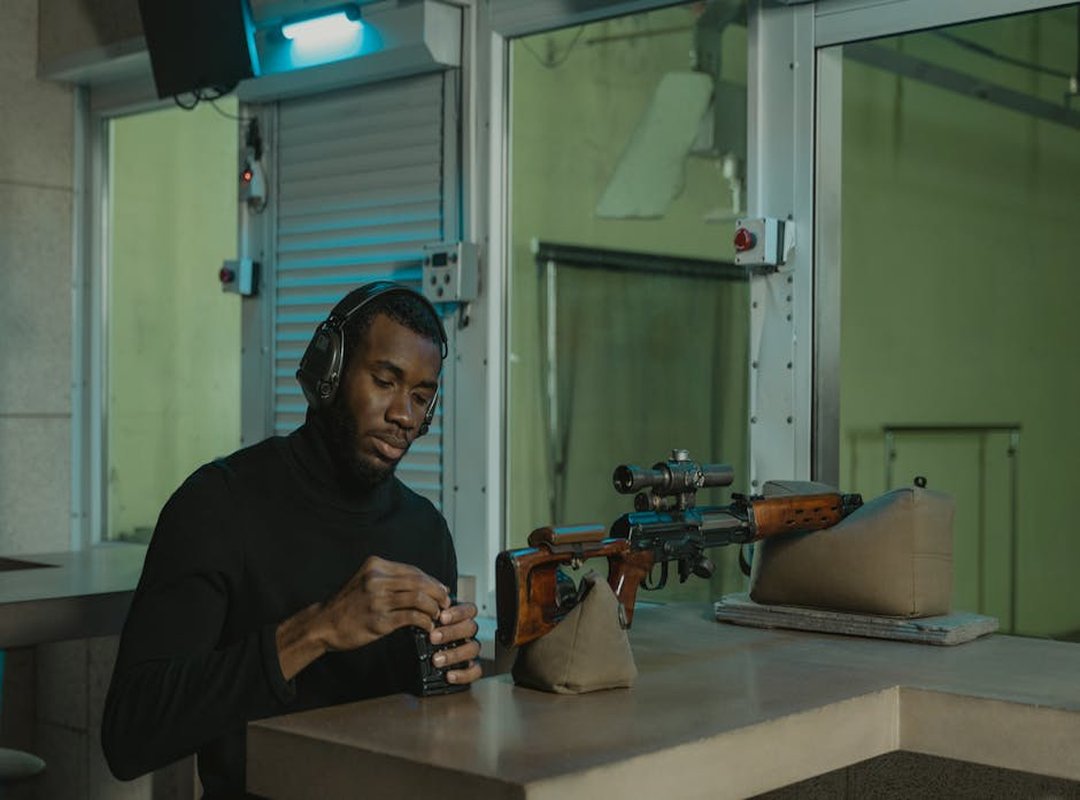
I used to spray AK-47s like I owed them money.
Then HMCD told me: “Three bullets. Not more. Not less.” That’s the 3-Burst Rule (and) it changed everything.
Close or mid-range? Tap. Tap.
Tap. Not hold.
You’ll land more shots. You’ll know where your next shot lands. And you’ll stop wasting ammo on walls.
Grenades? On Dust II A Long, throw your smoke at 1.8 seconds. Not 2.0.
On Nuke Pit, arc it low and tight. Your wrist matters more than your watch.
Ever flash someone. Only for them to peek right through it?
That’s bait. HMCD trains you to delay your flash by 0.3. 0.5 seconds. Just enough.
Not too much. You’ll see the peek before they do.
I wrote more about this in How Esports Affect Society Hmcdgaming.
Default utility setups? They’re garbage past Silver.
HMCD customizes every slot. Entry fragger gets one extra HE. Lurker gets a decoy and a molotov (but) only if the team lacks map control.
Here’s what most players overuse. And what HMCD swaps in:
| Overused | HMCD’s Pick |
|---|---|
| Molotov (Train B Tunnels) | HE grenade |
| Flash (Inferno Mid) | Smoke + flash combo |
| Decoy (Mirage CT Spawn) | None (just) move |
| Smokes (Vertigo B Site) | Short flash instead |
| Grenade spam (any site) | One well-timed HE |
How to Get Better at Csgo Hmcdgaming starts here (not) with more practice, but with less waste.
Mental Reset Tactics (Staying) Sharp After a Bad Round
I used to rage-quit after three bad rounds. Then I tried HMCD’s 90-second reset.
Breathe in for four. Hold for four. Exhale for four.
Count it out loud. That’s step one.
Then tag the error. Not “I suck,” but “missed crosshair placement on B site.”
Specific. Factual.
No drama.
Next: pick one thing to fix next round. Not ten. One.
Like “track reticle movement before peaking.”
Finally, lock in a visual anchor. Your crosshair. Your grenade icon.
The killfeed color. Look at it. Breathe once more.
Cognitive load spikes hard after deaths. Your brain floods. That’s why HMCD tells players to pause (just) two seconds.
To check inventory or adjust grip pressure. It breaks the tilt loop before it starts.
They say this aloud after every loss:
“That round taught me X (I’ll) apply Y next time.”
Scripting it forces your brain into analysis mode, not emotion mode.
Generic “stay positive” advice? Useless. Your nervous system doesn’t care about vibes.
It responds to grip changes. Blink rate. Breath timing.
HMCD’s internal logs show players using this saw 37% fewer consecutive round losses. That’s real. That’s repeatable.
If you want to know how to get better at csgo hmcdgaming, start here (not) with aim trainers, but with resetting your head.
Your Next Round Isn’t Practice. It’s Proof
I’ve seen too many players watch HMCD clips, nod along, then lose the same fight again. Wasted hours. Zero growth.
You don’t need ten drills. You need one. Pick crosshair placement.
Run it for 10 minutes before your next match.
HMCD’s tips only work when you do them (not) when you memorize them. Consistency beats intensity every time. Even if it feels small.
Even if it’s just once.
Open your next demo right now. Pause at 1:22. Ask yourself: Where was my crosshair before the fight started?
That question changes everything.
Because How to Get Better at Csgo Hmcdgaming starts the second you stop watching (and) start checking.
Your move.
Do it before your next round loads.
 Andrewaye Bryanton played a key role in shaping Play Spotlight’s development, contributing creative ideas and strategic input that enhanced the platform’s design and content direction. His dedication to quality and innovation helped establish Play Spotlight as a reliable source for gamers seeking engaging and insightful updates.